Generative Engine Optimization
The strategy used to make a brand easier for AI systems to understand, associate with the right topics, and recommend in the right contexts.


Z‑SERIES DEDICATED GEO + AI BRAND VISIBILITY
Help generative engines understand, trust, cite, and recommend your brand. Z-SERIES connects entity research, on-site GEO changes, human-reviewed content, third-party authority and reputation signals, and RankLens reporting inside one managed campaign.
WHAT IS GENERATIVE ENGINE OPTIMIZATION?
Traditional SEO pursues visibility in search results. GEO pursues visibility inside generated answers, comparisons, summaries, recommendations, and conversational discovery—where entities and corroborating signals matter more than a single fixed “keyword rank.”
The strategy used to make a brand easier for AI systems to understand, associate with the right topics, and recommend in the right contexts.
The measurable outcome: how often, how accurately, and how strongly a brand appears across supported AI engines, locations, languages, and entity sets.
The broader overlap between SEO, content clarity, entities, structured information, authority, and the signals that support AI-assisted discovery.
Answer-focused structure that helps systems extract clear, useful responses. It can support both search features and generative answer experiences.
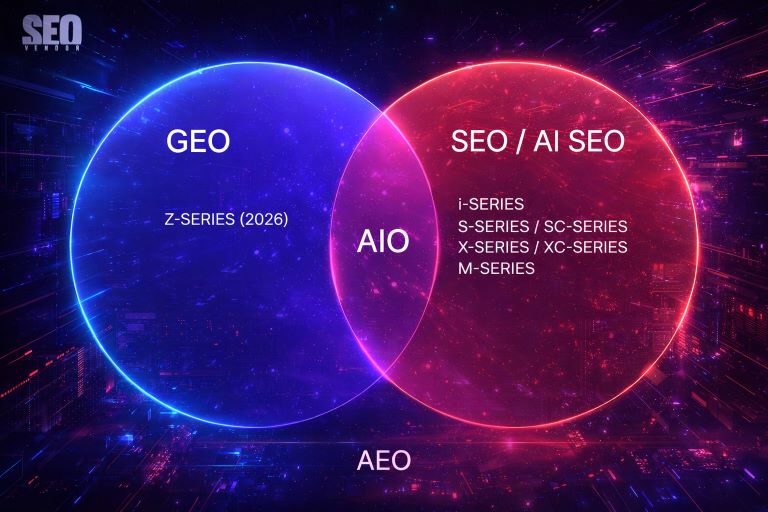
THE SEARCH + AI LANDSCAPE
Strong SEO and brand signals can support AI discovery. A dedicated GEO campaign adds entity-first execution and AI Brand Visibility measurement.
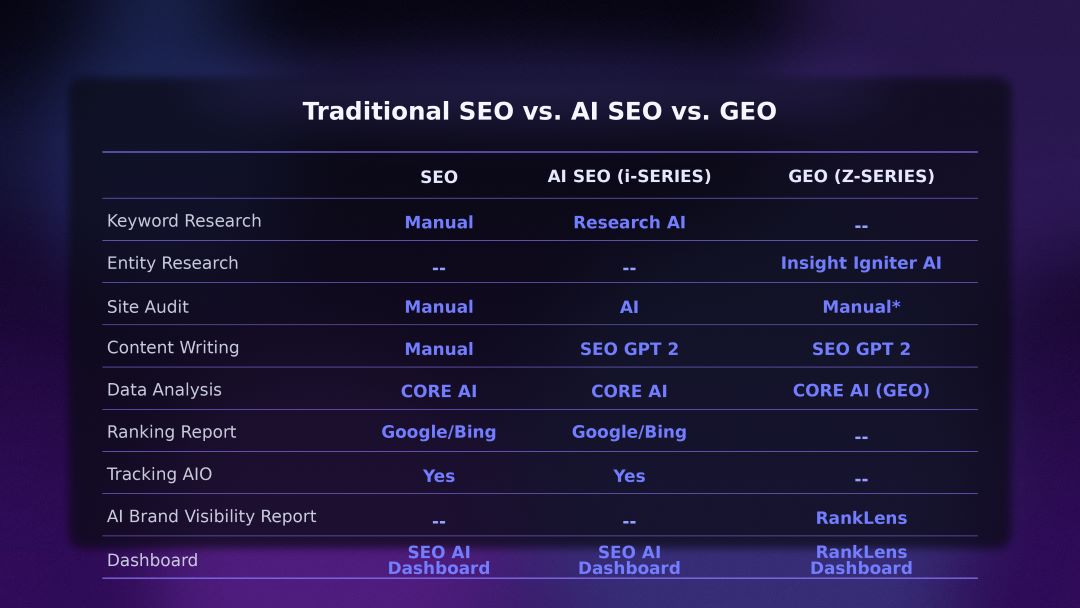
DEDICATED Z-SERIES SCOPE
Z-SERIES centers on entity research, GEO analysis, AI visibility reporting, and supporting content and authority signals rather than conventional ranking reports.
THE GEO OPERATING SYSTEM
AI outputs vary, so GEO cannot be managed as a one-time page edit. Z-SERIES uses a recurring control loop that connects entity strategy, implementation, content, authority, reputation, distribution, and RankLens reporting.
Sample supported engines by entity, location, language, and match context to see where the brand appears—and where it does not.
Turn services, products, markets, customer problems, and real prompts into focused entity sets AI systems can associate with the brand.
Use the GEO audit and change specification to improve page clarity, entity alignment, brand consistency, and supporting signals.
Create human-reviewed on-site and off-site content, authority links, reputation assets, social signals, and press distribution.
Track changes through RankLens, compare engines and competitors, and direct the next campaign response toward the clearest opportunity.
REPEATABLE AI BRAND VISIBILITY MEASUREMENT
RankLens reduces dependence on a single “lucky” response by supporting repeated sampling, scheduled reporting, stable averages and ranges, entity-based analysis, and side-by-side visibility across supported AI environments.
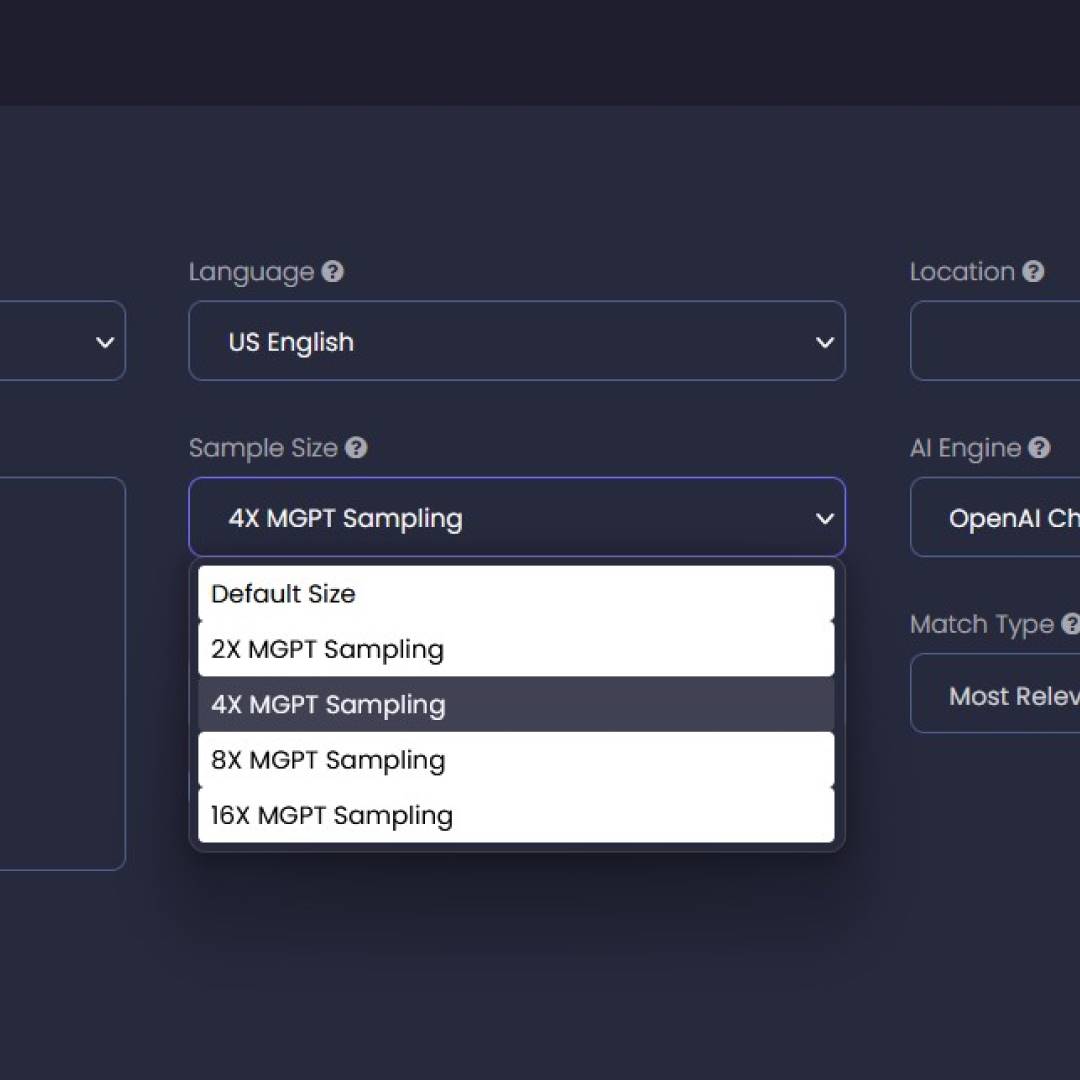
MULTI-SAMPLING
Use repeated sampling options to reduce randomness and make trend comparisons more meaningful.
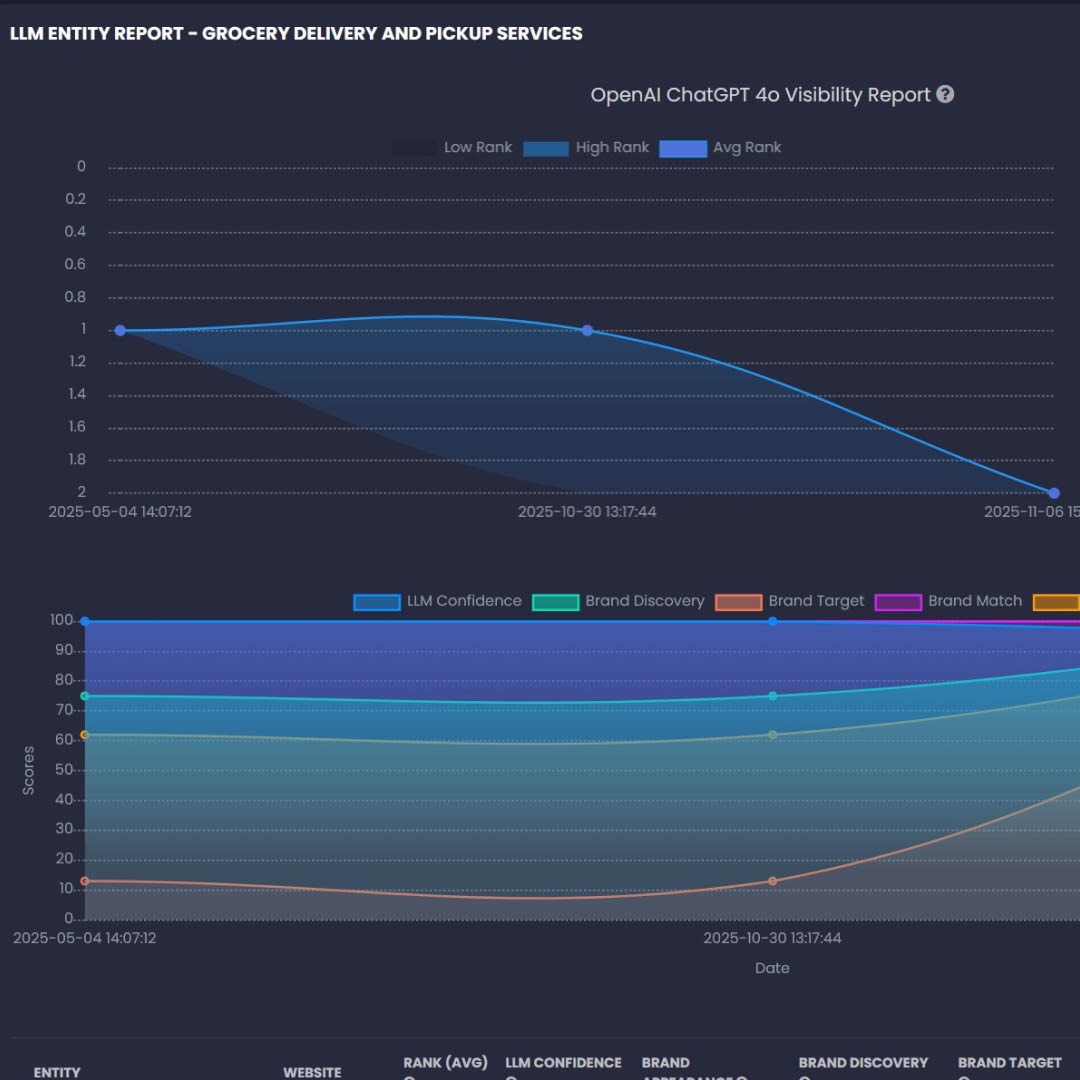
SCHEDULED REPORTING
Run recurring reports weekly or monthly and compare changes across dates, metrics, entities, and AI engines.
TRACK VISIBILITY OVER TIME
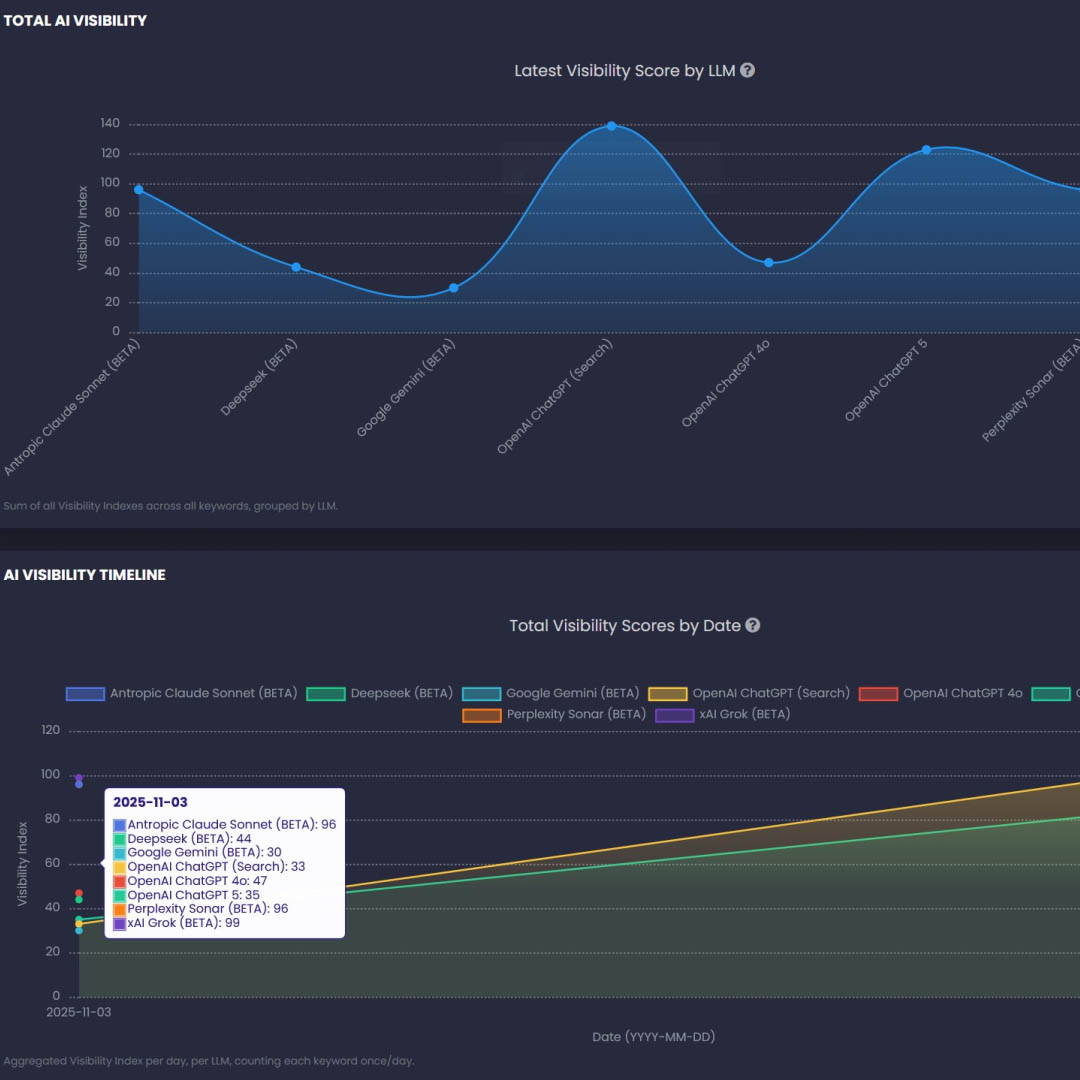
A brand can be highly visible in one model and nearly absent in another. GEO reporting exposes those differences so the campaign can focus on the entities and environments with the largest opportunity.
ENGINE-BY-ENGINE TRENDS
Review per-engine movement instead of hiding materially different AI environments inside a single undifferentiated total.

LOCALIZED CONFIGURATION
Configure language, location, engine, sample size, schedule, and match type around the campaign’s actual discovery context.
ONE INDEX, MULTIPLE DIAGNOSTIC SIGNALS
A clear visibility index helps stakeholders understand the headline. The underlying factors explain why the score moved and where the campaign should respond next.
How frequently the brand or website appears across repeated responses for the target entity set.
How often the brand appears compared with competitors when AI systems recommend or compare options.
The likelihood that the brand is surfaced when the user is not explicitly asking for it by name.
How precisely and consistently AI systems return the intended brand when the request clearly points toward it.
The strength of name, URL, spelling, and variant matching across responses and contexts.
How strongly the model appears to favor or support the recommendation within the measured response set.
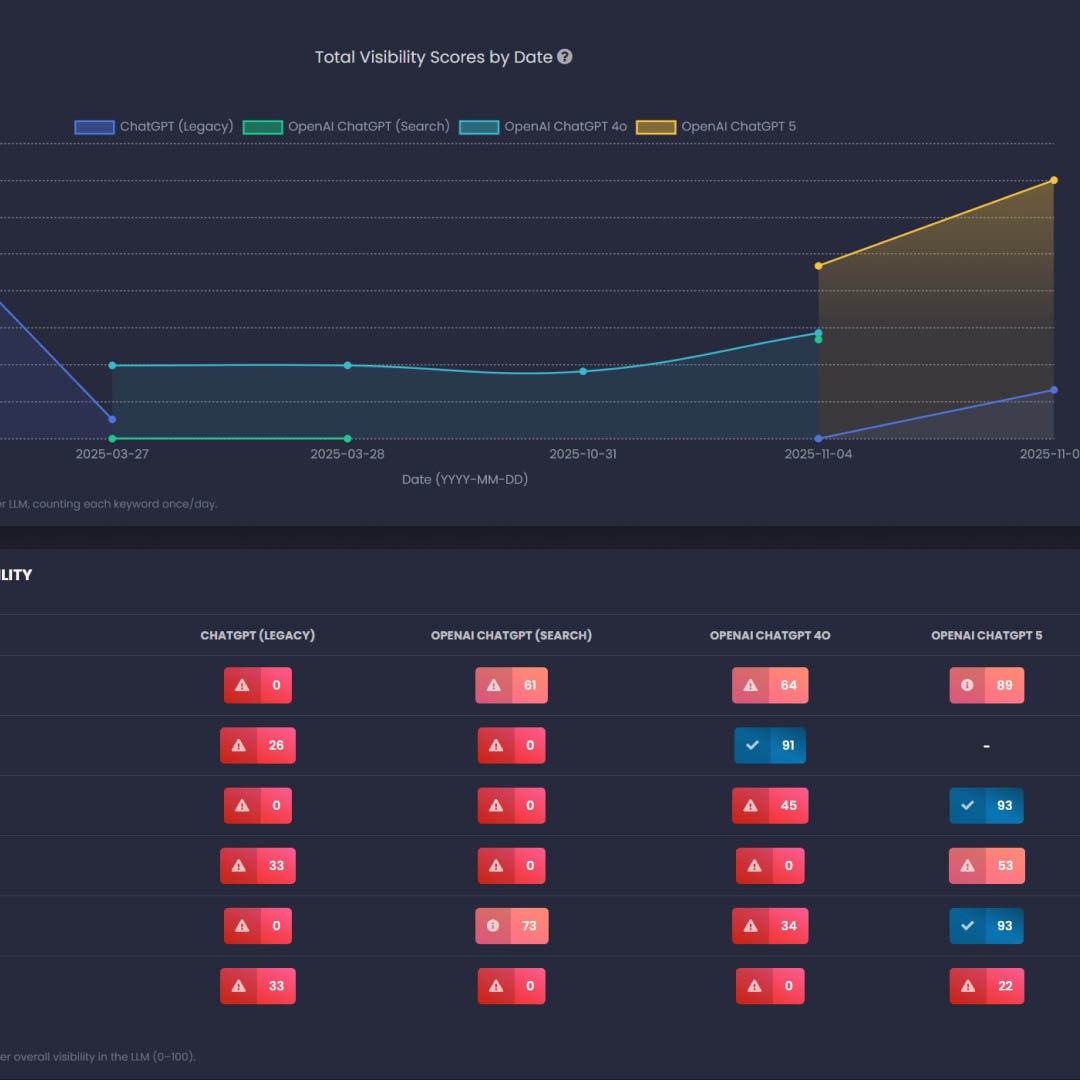
TOTAL VISIBILITY
Review visibility movement and per-engine differences across the tracked entities.
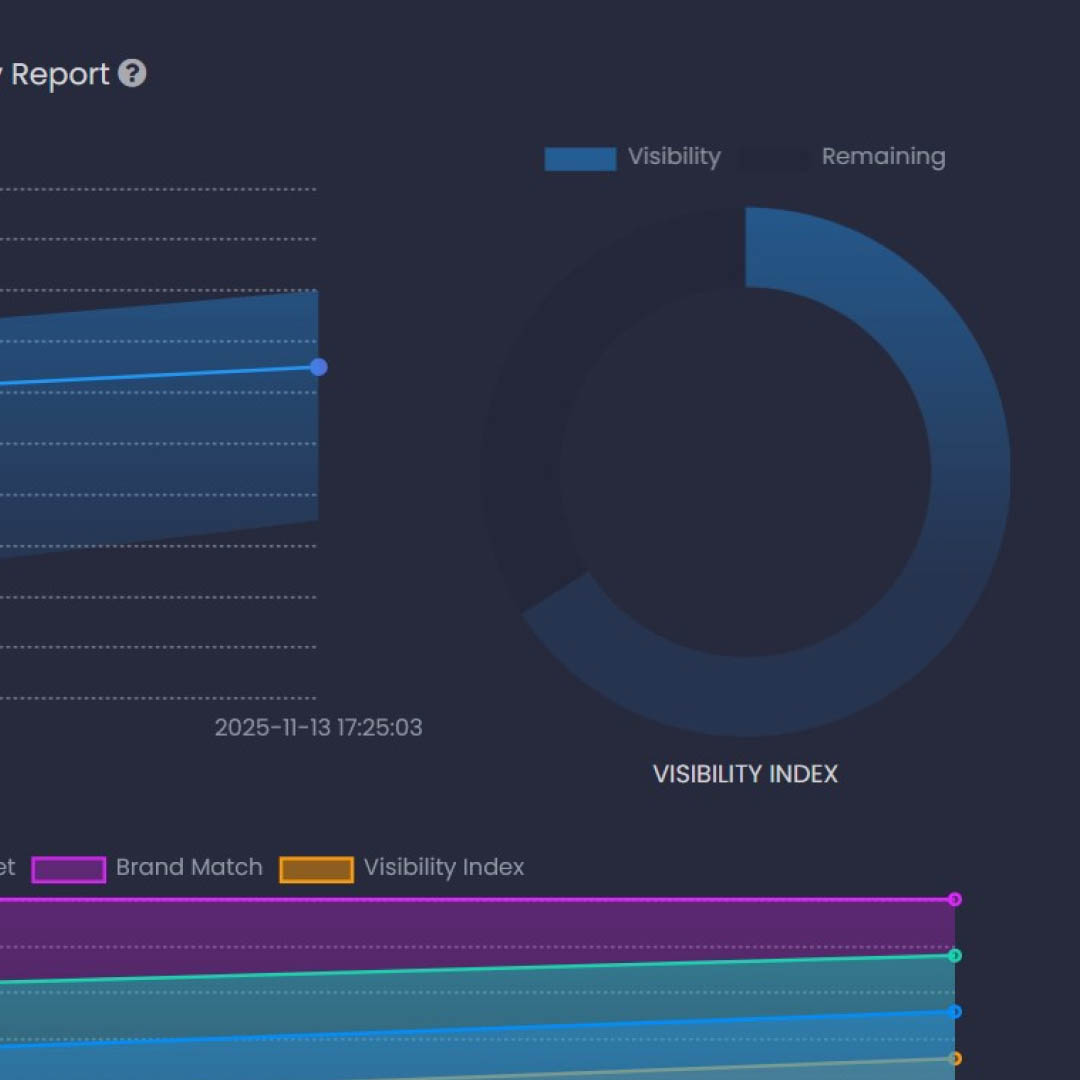
VISIBILITY INDEX
Roll multiple signals into a simpler index while preserving the detail needed for diagnosis.
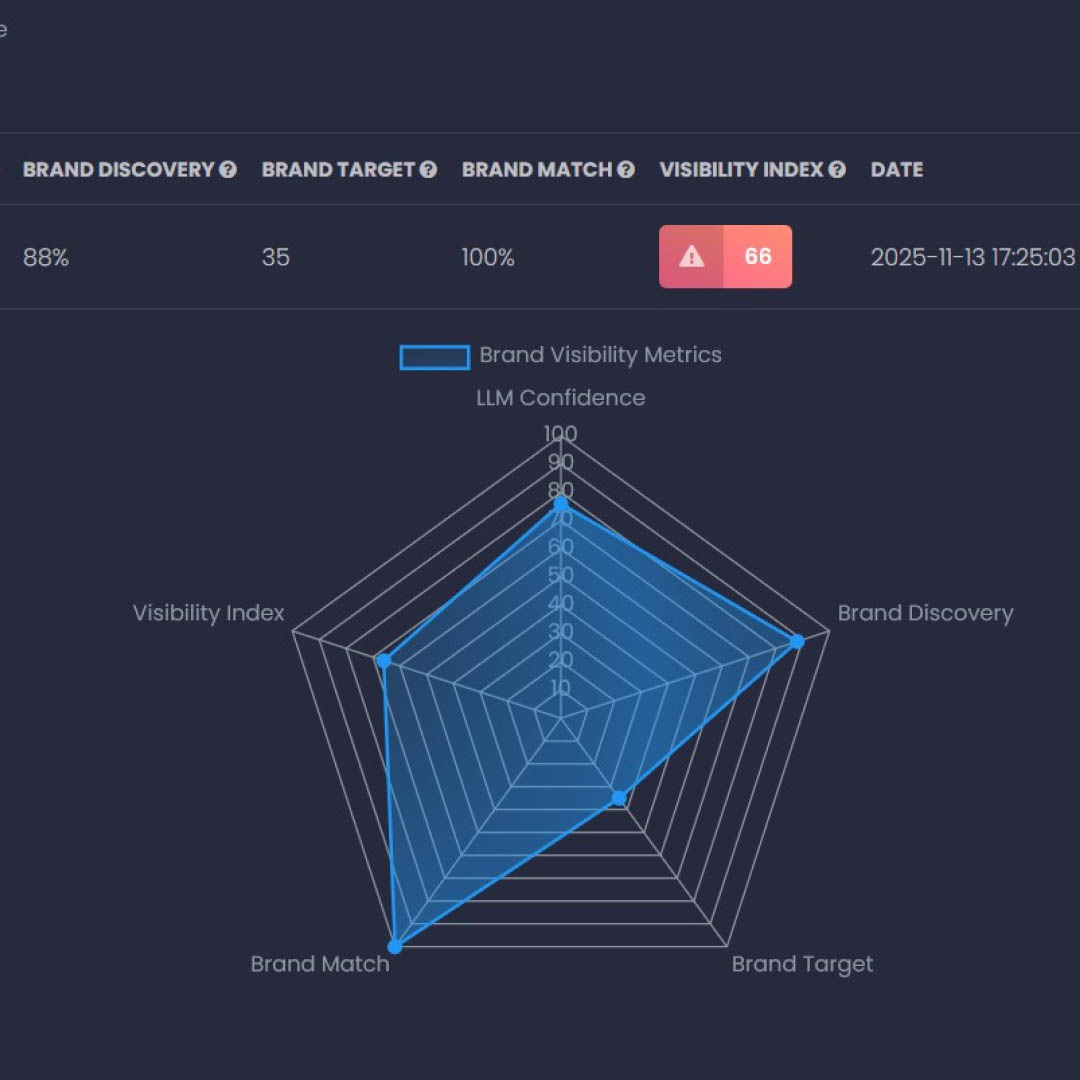
FACTOR BREAKDOWN
Separate discovery, targeting, matching, confidence, and overall visibility instead of relying on one opaque number.
CATCH BRAND CONFUSION EARLY
AI systems can misspell a brand, connect it to the wrong category, merge it with another company, or recommend a competitor when the request clearly favors you. Z-SERIES uses entity and match analysis to identify those failures before the campaign decides how to respond.
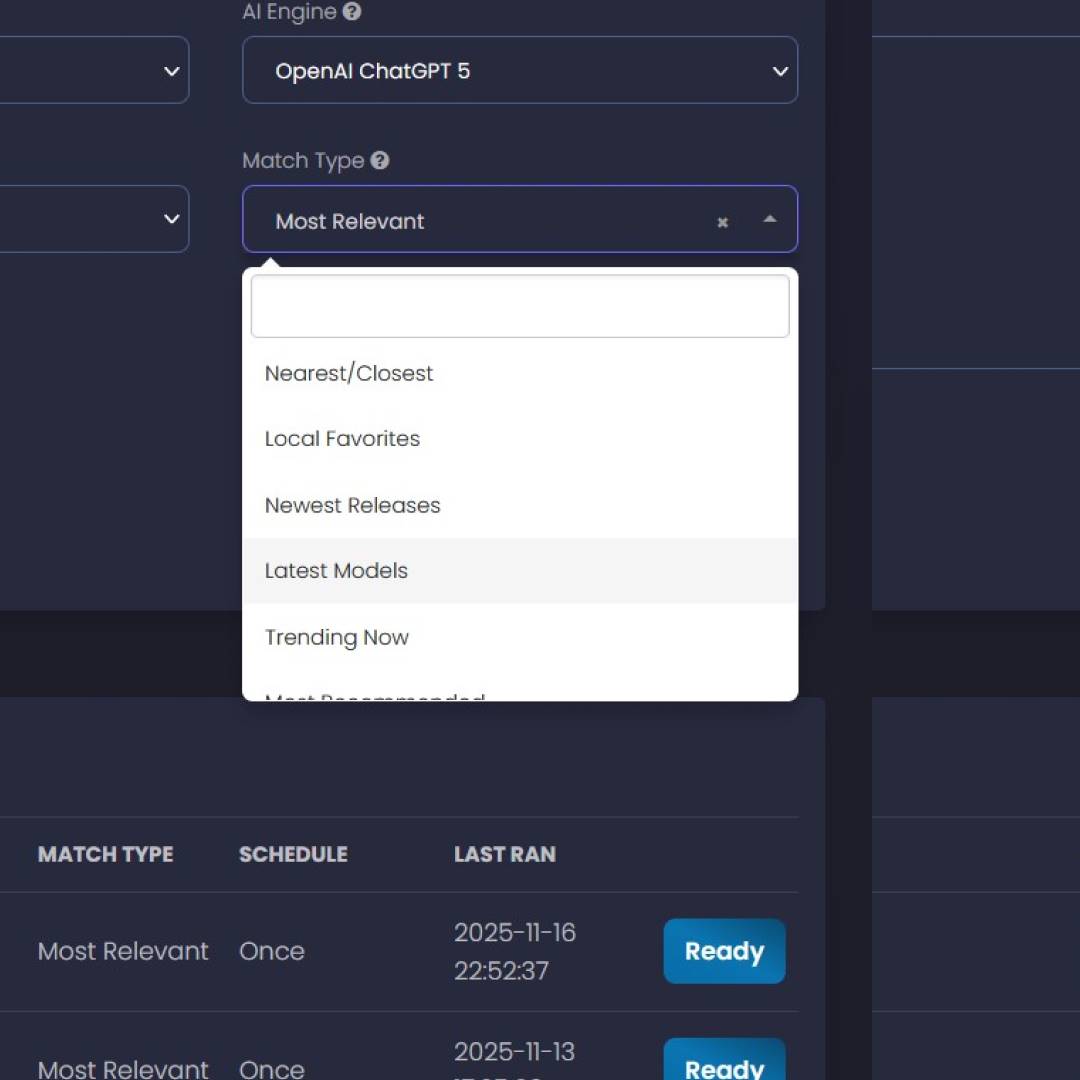
MATCH CONTEXT
Measure discovery across relevant recommendation types rather than reducing every prompt to the same generic query.
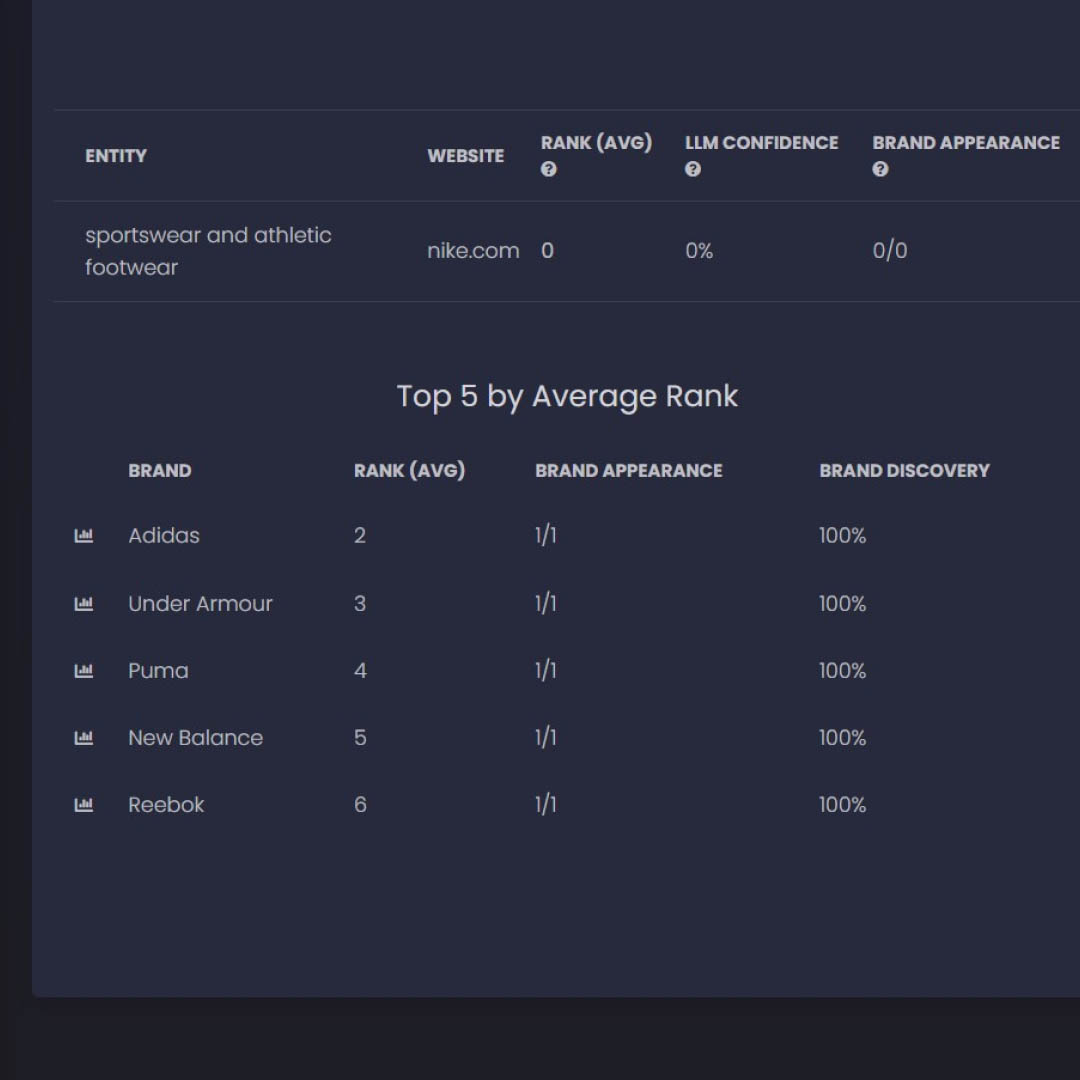
COMPETITOR CONTEXT
Compare appearance and discovery against competitors to identify the brands and signals occupying the current answer space.
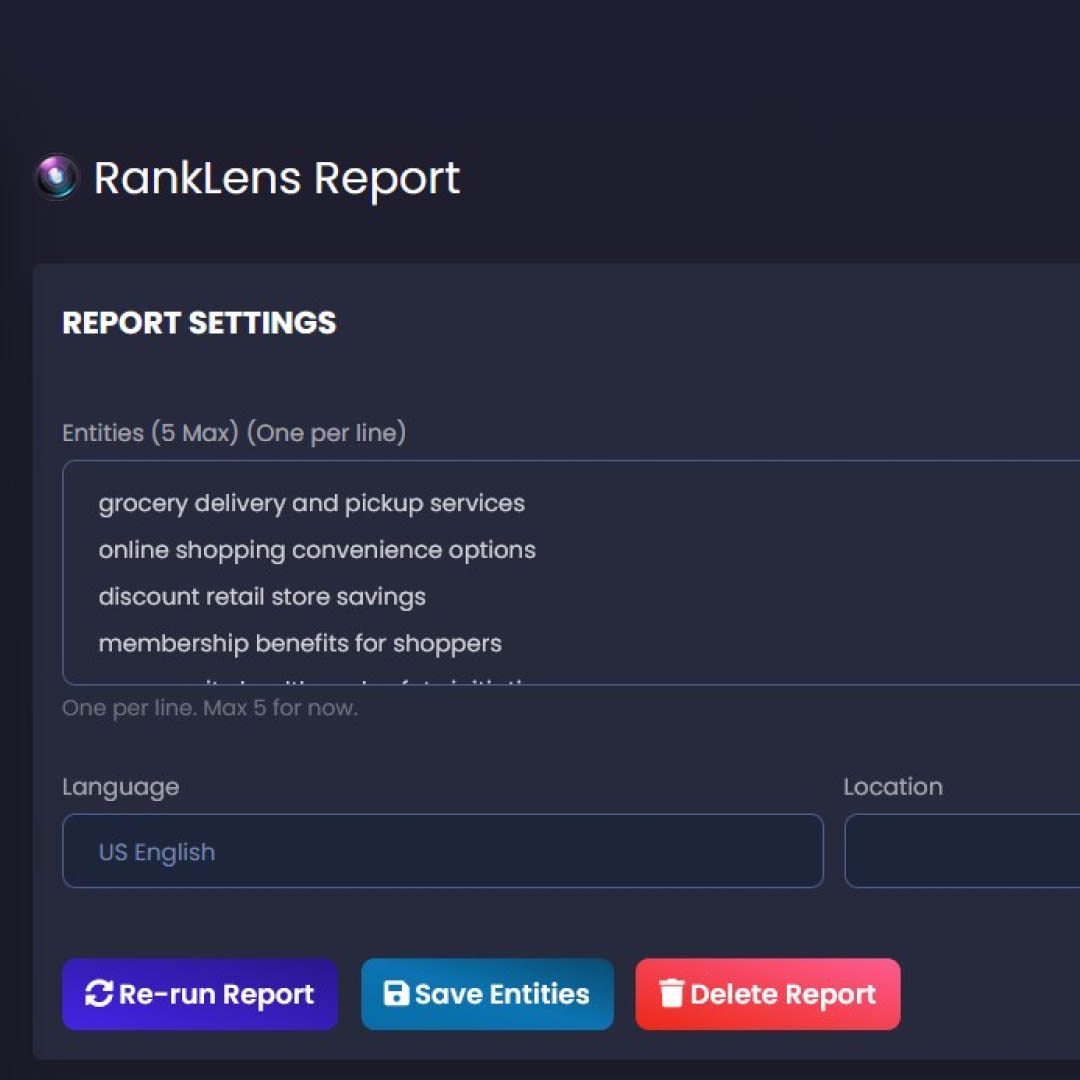
ENTITY SETS
Build focused entity groups around services, products, use cases, audiences, and markets rather than relying on isolated keywords.
See the methodology and research behind entity-based visibility monitoring in the open-source RankLens Entities study.
Z-SERIES GEO SERVICES + DELIVERABLES
Every plan connects a launch framework with recurring content, authority, reputation, distribution, and reporting. The quantity scales by plan; the operating logic stays connected.
Use Insight Igniter AI, business inputs, market context, and real customer prompts to define the concepts the campaign should own.
Explore Insight Igniter AI →Establish visibility, association, reputation, content, and corroboration gaps across the approved entity set and campaign scope.
Run a free GEO audit →Translate findings into page-level changes for entity clarity, answer structure, brand consistency, useful evidence, and internal relationships.
Produce entity-aligned on-site and off-site content with research, source review, brand refinement, originality controls, and human oversight.
See the Prose editorial system →Support the brand narrative through quality-reviewed placements, contextual links, press distribution, social publishing, and reputation assets.
Use GEO-focused campaign intelligence to connect observations with the technical, content, authority, reputation, or distribution response.
Explore CORE AI →Track entities, engines, locations, languages, competitors, visibility factors, and changes over time in a client-ready reporting environment.
See RankLens reporting →Use each reporting cycle to refine the next entity, page, source, reputation signal, or campaign action instead of repeating a fixed checklist.
Z-SERIES GEO PRICING SNAPSHOT
This service page provides a concise overview. The GEO pricing page is the source of truth for current inclusions, subscription options, guarantees, terms, and ordering links.
Focused GEO foundation
$599/mo
Expanded brand coverage
$899/mo
High-output authority growth
$1,599/mo
Maximum signal coverage
$2,499/mo
GEO VS. SEO—AND WHEN TO USE BOTH
The disciplines overlap through content, entities, authority, technical clarity, and brand consistency—but the primary goals and reporting are different. Many brands benefit from running both as coordinated campaigns.
DEDICATED Z-SERIES GEO
SEO + GEO-READY SIGNALS
COORDINATED SEARCH EVERYWHERE
Explore SEO Vendor's SEO services and campaign options, or compare them with dedicated Z-SERIES GEO plans.
DIRECT + WHITE-LABEL GEO SERVICES
Use Z-SERIES as a direct GEO campaign for your own organization or as the managed fulfillment layer behind your agency. Strategy, production, reporting, and AI visibility stay connected either way.
FOR BUSINESSES + BRANDS
FOR AGENCIES + RESELLERS
GENERATIVE ENGINE OPTIMIZATION FAQ
AI chatbots do not work like a fixed search-results page. They are probability-based and entity-driven, and their answers can vary. When a response lists brands, order or position may be observed, but meaningful GEO progress is measured through repeated AI Brand Visibility signals rather than a promised single keyword rank.
Real prompts can be converted into focused entities and match contexts, then tracked across similar questions and repeated samples. No provider controls one exact model response, but a campaign can measure and improve the consistency of visibility across the broader entity set.
Entities are the people, brands, products, services, locations, categories, problems, and concepts AI systems use to understand meaning. A GEO entity set can describe what your brand does, who it serves, where it operates, and the situations in which it should be considered or recommended.
Timing varies by existing authority, competition, entity difficulty, implementation speed, and the depth of work required. Some brands can show movement within several months, while others need a longer 6–12 month horizon. AI outputs and models are not controlled by SEO Vendor, so a specific placement cannot be guaranteed. See the GEO pricing page for current campaign guarantees and their terms.
The current Z-SERIES pricing framework is built around OpenAI ChatGPT, Google Gemini, Anthropic Claude, xAI Grok, and Perplexity Sonar. RankLens can support additional models and AI environments as they become available and as report data exists.
GEO is the strategy and campaign work. AI Brand Visibility is the measured outcome of that work. LLM visibility is another common description for brand appearance inside large-language-model answers. In practice, the terms overlap, but separating strategy from measurement makes the campaign easier to manage.
No, although the disciplines overlap. Strong content, authority, technical clarity, brand consistency, and useful information can support both. SEO primarily targets conventional organic search performance; dedicated GEO targets appearance and recommendation visibility inside AI-generated answers and measures that outcome through RankLens.
No. Z-SERIES focuses on AI Brand Visibility, entity associations, brand and website appearance, competitors, matching, discovery, and related AI-output metrics. Traditional Google and Bing ranking work belongs in the appropriate SEO campaign.
Both kinds of discovery signals can matter. GEO strengthens the brand information and corroboration that may influence model knowledge while also improving the live, indexed, and retrievable sources an AI system can use when it performs search or retrieval-augmented generation.
Current SEO campaigns can include GEO-ready signals such as stronger branding, topic alignment, useful content, authority, and AI visibility capabilities. A dedicated Z-SERIES campaign adds an entity-first target framework, GEO-specific analysis and changes, recurring GEO deliverables, and dedicated RankLens measurement. The right choice depends on whether AI discovery is a supporting goal or the primary campaign outcome.
RankLens can evaluate repeated brand appearance, recommendation order when applicable, share of voice, brand discovery, brand target precision, brand match strength, LLM confidence, competitor context, and an overall visibility index. Reports can be segmented by supported engine, date, language, location, entity, and match type.
Yes. Z-SERIES can be used for direct client work or as white-label fulfillment behind an agency. The campaign framework, production, reporting, and visibility explanations can support agencies that want to add a dedicated GEO offer without building every capability internally.
START WITH VISIBILITY
Establish a measurable baseline, choose the entity set that matters, and build a campaign around the gaps that can actually be observed. Start free, compare Z-SERIES plans, or speak with the GEO team.